




































In short: a smart card reader is a device that lets a computer talk to the chip inside a card. Contact readers use the gold chip contacts (ISO 7816). Contactless readers use radio at 13.56MHz (ISO 14443) for cards such as MIFARE and DESFire. A dual interface reader does both in one device. 125kHz proximity readers are a separate family that mainly read a card number. Match the reader to the card technology you already use, then check the connection and your operating system.
What does a smart card reader do?
A smart card reader connects a card to a computer so that software can read data from the card and, where the card allows it, write data back. That is why many products are described as a "reader/writer" or "card encoder". The reader itself does very little thinking. The software on the PC decides what to read, what to write and what to do with the answer.
Most desktop readers connect to a PC and are used for three jobs: logging people in to computers and applications, enrolling new cards into a system and encoding data onto cards. The right smart card reader for you depends almost entirely on which card technology you use.
Contact, contactless, dual interface and 125kHz compared
| Reader type | Frequency | Standard | Typical cards | Typical uses |
|---|---|---|---|---|
| Contact | None (physical chip contacts) | ISO/IEC 7816 | Contact chip cards with a visible gold chip | Digital signatures, secure PC login, certificate-based applications |
| Contactless (high frequency) | 13.56MHz | ISO/IEC 14443 (some readers also ISO 15693) | MIFARE Classic, MIFARE DESFire, NFC devices | Access control enrolment, PC login with a staff badge, encoding |
| Dual interface | Contact plus 13.56MHz | ISO/IEC 7816 and ISO/IEC 14443 | Both contact chip cards and contactless cards | Mixed card estates, migration from one technology to another |
| 125kHz proximity | 125kHz (low frequency) | No single ISO standard; proprietary formats | HID Prox and similar proximity cards | Reading the card number for access control and logical access |
What is a contact smart card reader?
A contact smart card reader has a slot. You insert the card and small pins touch the gold chip contacts on the card face. Contact chips follow ISO/IEC 7816, which defines the contact layout and how the chip communicates.
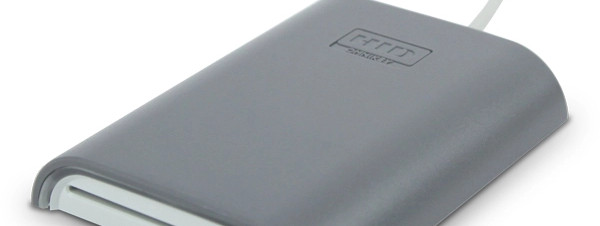
Contact readers are common for digital signature and secure login applications. For example, the HID Omnikey 3021 USB is described by its maker as suited to contact smart card operations like online banking or digital signature applications. If your cards have a visible chip, a contact reader is the starting point. Plastic-ID also stocks contact chip smart cards.
What is a contactless card reader?
A contactless card reader, sometimes called a contactless smart card reader, communicates by radio. The card is tapped on or held close to the reader, so nothing needs to be inserted. Most contactless smart cards used for ID and access control run at 13.56MHz and follow ISO/IEC 14443. MIFARE Classic and MIFARE DESFire cards both fall into this group, as do many NFC devices.
Because a contactless reader is often called an RFID reader, it helps to be precise: "RFID" covers both 13.56MHz and 125kHz technology, which are not interchangeable. A MIFARE reader will not normally read a 125kHz proximity card unless it is specifically a multi-frequency model. Browse the contactless card readers range to compare options.
Are MIFARE and DESFire cards read by the same reader?
Often yes, since both are 13.56MHz ISO 14443 cards. Reading the card's serial number is usually straightforward. Reading or writing the secure data areas depends on the reader, the software and holding the right keys. Our guide to proximity vs MIFARE vs DESFire explains how the card types differ.
What is a dual interface smart card reader?
A dual interface smart card reader combines a contact slot and a contactless antenna in one device. It suits organisations that use both kinds of card. It also suits those moving from one technology to the other.
The Identiv uTrust 4701 F is a PC-linked dual interface reader. Identiv describes it as supporting ISO/IEC 7816 contact cards, 13.56MHz contactless technology and NFC, with uses such as network log-on and secure web-based transactions. It works with ID-1 cards, tokens and NFC-enabled smartphones.
The HID Omnikey 5422 is another dual interface reader. HID states that it reads and writes to 13.56MHz contactless smart cards and virtually any contact smart card. It uses the CCID drivers built into standard operating systems, so separate driver installation is not needed.
Where do 125kHz proximity readers fit?
125kHz proximity is an older low frequency technology. A proximity card mainly carries a number, so a 125kHz reader is used to read that number rather than to store or write large amounts of data. It is not a smart card in the chip sense, yet proximity cards remain widely used for door access.
Some desktop smart card readers bring proximity cards to the PC. The HID Omnikey 5025 CL supports 125kHz proximity, reads the unique number from HID Prox cards and supports Windows, Linux and Mac operating systems. HID positions it for using existing door cards for logical access. Access control systems often have their own enrolment readers too, such as the Paxton Net2 desktop readers. Our article on access control cards and fobs covers how these systems use card numbers.
Desktop reader or printer-mounted card encoder?
A desktop smart card reader sits next to a PC. It is the usual choice for logging in, enrolling cards one at a time and reading card numbers into software.
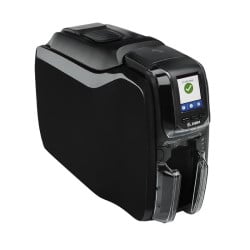
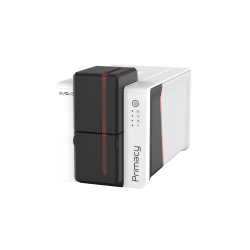
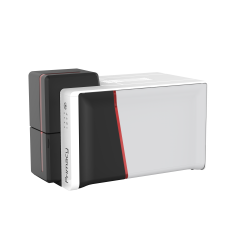
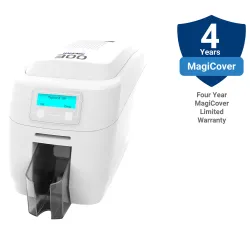
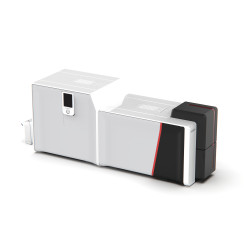
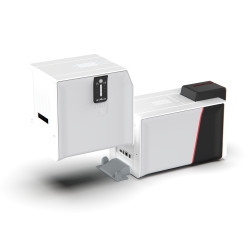
A card encoder fitted inside an ID card printer encodes the chip during the print run, so each card is printed and programmed in one pass. This suits organisations issuing personalised smart cards in volume. Encoders are specific to the printer model, so check compatibility with the printer and with your card design software before ordering. Plastic-ID lists encoder kits for some Evolis printers, for example the SpringCard Crazy Writer kits.
What should you check before buying a smart card reader?
- Your card technology. Contact chip, 13.56MHz (MIFARE, DESFire), 125kHz proximity or a mix. This decides the reader family. If you are unsure, ask your access control installer or check the card supplier's details.
- What you need to do. Reading a card serial number is a simpler task than writing secure data to a DESFire application.
- Connection. Most desktop readers connect by USB. Some models offer other interfaces such as Bluetooth.
- Operating system and drivers. Check the maker's stated support for your operating system. Readers that use the standard CCID class driver avoid separate driver installs on supported systems.
- Software compatibility. Your login, enrolment or encoding software must support the reader. Many applications talk to readers through the PC/SC interface, so confirm your software and reader both support it where that applies.
- Keyboard wedge. Some readers, such as the HID Omnikey 5427 CK, can type the card data into an application as keystrokes, which is useful for simple card number capture.
Payment terminals are a different category with their own certification, so payment card readers are not covered here.
Frequently asked questions
What is the difference between a card reader and a card encoder?
A card reader reads data from a card. A card encoder also writes data to it. Many smart card readers are reader/writers, so the difference is often in the software rather than the hardware.
Can a contactless card reader read 125kHz proximity cards?
Not usually. 13.56MHz and 125kHz are different technologies. You need a 125kHz reader or a multi-frequency reader that states support for both.
What is a dual interface reader used for?
A dual interface reader handles both contact chip cards and 13.56MHz contactless cards in one device. It suits mixed card estates and migrations between technologies.
Does a smart card reader need drivers?
It depends on the model and operating system. Readers that use the CCID standard work with drivers already built into supported operating systems. Always check the maker's stated support.
Can I use a smart card reader to enrol access control cards?
Yes, where your access control software supports the reader. Many systems simply need the card number read into the software. Some access control brands supply their own desktop enrolment readers.
Is a MIFARE reader the same as an RFID reader?
A MIFARE reader is one kind of RFID reader. RFID also includes 125kHz proximity technology, which a MIFARE reader will not normally read.
Not sure which smart card reader matches your cards? Browse the full range of card readers or contact the Plastic-ID team, who can help you match the reader to your cards and software.