











































In short: Sixth form lanyards and other colour-coded school lanyards let staff see who belongs on site at a glance. A simple scheme gives each group its own colour and printed word, such as STAFF, STUDENT, SIXTH FORM or VISITOR. Choose a breakaway lanyard for anyone wearing one all day, pair it with a clear card holder and keep spare stock of every colour so the system never breaks down.
Why do schools use lanyards and visible ID?
Schools use lanyards because a card worn at chest height can be checked without stopping anyone. Every school follows its own safeguarding policy and statutory guidance such as Keeping Children Safe in Education. Visible ID is one practical tool that supports that policy. It does not replace signing in, DBS checks or a member of staff asking a question.
The value comes from speed. In a busy corridor a teacher cannot read every badge but can notice a colour. When each group on site wears a different lanyard, an unfamiliar colour or a missing lanyard stands out straight away. If you are new to the basics, our guide what is a lanyard covers widths, clips and breakaway fittings.
How do colour-coded lanyards work in a school?
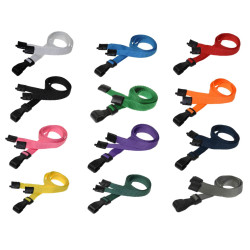
Colour-coded lanyards work by giving one colour to one group, then sticking to it. There is no national colour scheme that schools must follow. Each school chooses its own scheme and explains it to staff, students and regular visitors.
The table below is an illustrative example of a scheme a school might choose. It is not a legal requirement or a recommended standard.
| Group | Example lanyard | Why it works in this example |
|---|---|---|
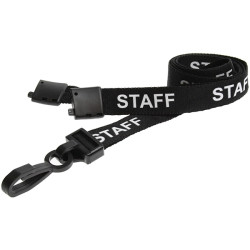
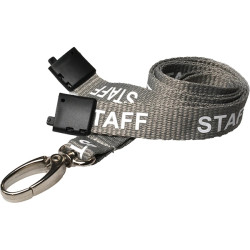
| Staff | Red, printed STAFF | A bright colour pupils can spot when they need an adult |
| Students | Purple, printed STUDENT | Sits apart from common staff colours such as navy, black or grey |
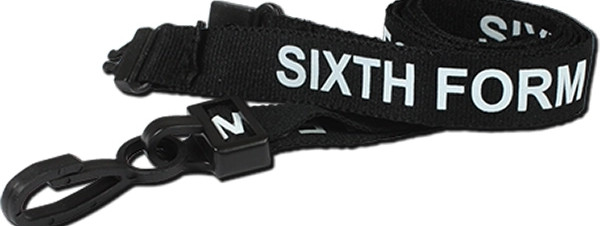
| Sixth form | Black, printed SIXTH FORM | Smart and understated, so older students stand apart from younger year groups |
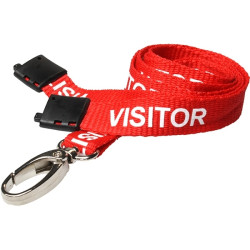
| Visitors | Dark green, printed VISITOR | A colour of its own, separate from staff and students |
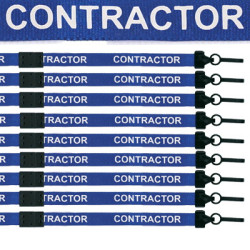
| Contractors | Blue, printed CONTRACTOR | Separates people working on site from staff and visitors |
| Supply or temporary staff | A plain lanyard in a colour not used elsewhere | Shows an adult is working on site while marking them as short term |
Keep the colours clearly different. A dark green visitor lanyard and a light green lanyard for another group could be confused at a distance, so pick one green and give it to one group only. Printed wording helps because the text confirms the colour.
What are sixth form lanyards for?
Sixth form lanyards mark out older students so staff can tell them apart from the rest of the school. Many sixth forms have privileges younger year groups do not, such as study periods, a common room or permission to leave site at set times. Distinct sixth form lanyards make those privileges easier to manage because staff can see who is entitled to them.
Our black sixth form lanyards are 15mm wide and pre-printed with SIXTH FORM in white. Each comes with a plastic clip and a safety breakaway fitted as standard. Black sits neutrally against almost any uniform colour and reads as smart rather than playful, which suits older students.
The wider range of student and school lanyards includes a purple STUDENT lanyard for younger year groups. That makes it simple to order sixth form lanyards and student lanyards together when setting up a whole-school scheme.
Why does a breakaway lanyard matter for students?
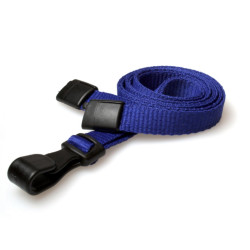
A breakaway lanyard matters because a cord around the neck should never be able to hold someone if it is caught or pulled. The breakaway is a safety fitting that separates under sudden pressure, then clips back together afterwards.
In a school that could be a door handle, PE equipment or a corridor scuffle. A safety breakaway is fitted as standard on our pre-printed lanyards, so there is nothing extra to specify. For custom lanyards you choose the breakaway yourself, with single, double or triple options. For students, a breakaway lanyard is the sensible default.
Plain, printed or personalised school lanyards?
The right choice depends on how much a lanyard needs to say on its own.
- Pre-printed lanyards carry wording such as STAFF, STUDENT, SIXTH FORM, VISITOR or CONTRACTOR. They need no artwork, so they are quick to order and replace.
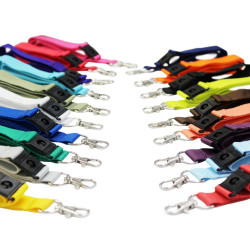
- Plain lanyards rely on colour alone. The plain lanyard range covers several widths and clip types, with breakaway options. Plain lanyards work well for groups with no pre-printed option, such as supply staff.
- Personalised lanyards carry your school name or logo. Custom lanyards are colour matched to the Pantone reference you supply, with a choice of width, clip and breakaway. Remember that personalised products have a production lead time, so order well before the start of term.
Are recycled lanyards an option for schools?
Yes. Several of our pre-printed staff and visitor lanyards are made from RPET, which is recycled plastic from bottles. Plain RPET lanyards are available at 10mm and 15mm widths. Recycled PET eco lanyards can also be personalised. Not every lanyard is RPET, so check the material on each product page. Our sixth form lanyards, for example, are polyester. Our post on RPET lanyards and plastic pollution explains the material in more detail.
What should go on the end of the lanyard?
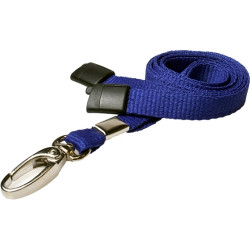
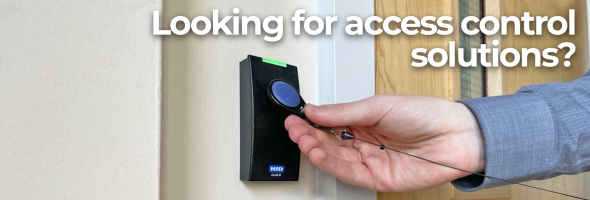
A lanyard only identifies a group. The ID card identifies the person. Most schools pair each lanyard with a photo ID card in a clear holder so staff can confirm a name and face when they need to. Pre-printed lanyards such as our sixth form lanyards can be ordered with a recyclable landscape card holder in a choice of colours, so the holder can match the lanyard too. You can also browse the full range of ID card holders, including open-faced and enclosed styles. Students who tap a card on a door reader may find a badge reel easier than unclipping a card each time.
Practical tips for running a school lanyard scheme
How much stock should a school keep?
Keep a reserve of every colour, including spare sixth form lanyards for new joiners. A scheme falls apart quickly if a visitor is given a staff lanyard because the visitor box ran empty. Check stock levels before each term and after big events such as open evenings.
How should lost lanyards be replaced?
Decide in advance who issues replacements and how it is recorded. Replace lost student and sixth form lanyards promptly so nobody goes without one for days. A simple log at reception helps you spot patterns.
How do you get visitor lanyards back?
Make returning the lanyard part of signing out. Issue visitor lanyards at reception with the visitor badge and collect them at the desk on the way out. A visitor lanyard that leaves site is one that could come back without a fresh check.
If you are planning a new scheme for next term, browse our sixth form lanyards and school lanyards or get in touch with the Plastic-ID team. We are happy to talk through colours, clips and card holders before you order.
Frequently asked questions
What colour lanyard should sixth formers wear?
There is no set colour. Each school chooses its own. Black suits sixth form lanyards well because it looks smart and stands apart from brighter colours used for younger students.
Are colour-coded lanyards a legal requirement in UK schools?
No law sets lanyard colours for schools. Schools follow their own safeguarding policies and statutory guidance such as Keeping Children Safe in Education. Colour-coded lanyards are one practical way to support that policy.
Do school lanyards need a safety breakaway?
A breakaway lanyard is the sensible choice for anyone wearing one all day, especially students. It separates if the lanyard is caught or pulled. All our pre-printed lanyards have one fitted as standard.
What colour should visitor lanyards be?
Any colour that no other group uses. Dark green works well because it is easy to tell apart from staff and student colours and the white VISITOR lettering stands out clearly.
Can we put our school name on lanyards?
Yes. Custom lanyards can be printed with your school name or logo and colour matched to your Pantone reference. Allow for the production lead time before term starts.