











































In short: Plastic ID cards are blank PVC cards in the standard CR80 credit card size that you print with photos, names and logos to make staff badges, student cards and membership cards. The right card depends on what the card has to do: plain white PVC for everyday photo ID, a coloured or metallic finish to tell groups apart, a magnetic stripe or chip if the card must be swiped or open doors and a composite card for heavy daily use. This guide explains each type so you can match the card to the job.
What are plastic ID cards made from?
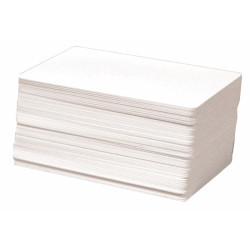
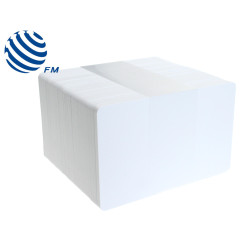
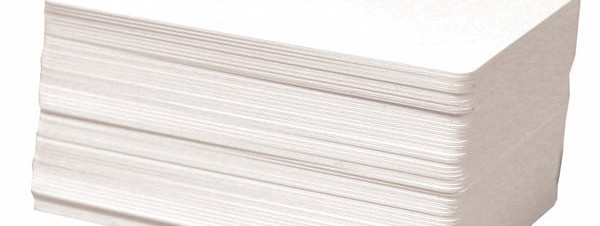
Most plastic ID cards are PVC. Our plain white PVC cards are 760 micron thick and conform to ISO/IEC 7810 for ID-1 type cards, which is the same format as a bank card. They measure 86 x 54mm, fit every standard card holder and suit both portrait and landscape designs.
The PVC surface is what lets an ID card printer reproduce brand colours and photos accurately. For card sizes, thickness options and a comparison of materials, see our ID card size guide. This guide concentrates on the features and finishes that change what a card can do.
Which plastic ID cards suit everyday photo ID?
For a standard staff or student badge printed in-house, start with a white 760 micron PVC card. Two options cover most needs:
- Plain white PVC cards: shrink-wrapped in packs of 100 and supplied dust free so printing runs smoothly.
- Fotodek Premium white cards: grade A cards with surfaces that are clean, scratch free and burr free. That gives crisp lines for text and barcodes, better photo quality and less wear on the printhead.
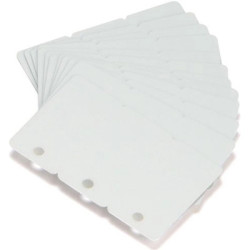
If the badge will hang from a lanyard, choose a card that is already punched. Fotodek white PVC cards come hole punched or slot punched in portrait or landscape, as well as a double landscape slot punch. If the card will live in a holder, a punch is not needed.
What finishes and colours can plastic ID cards have?
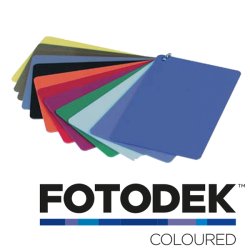
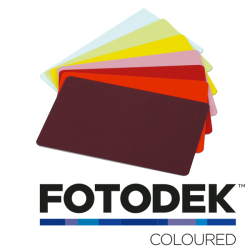
A coloured card can do part of the work of your design. It can show at a glance whether someone is staff, a contractor or a visitor. It can also carry a brand colour without printing a solid background.
| Finish | What it is | Typical use |
|---|---|---|
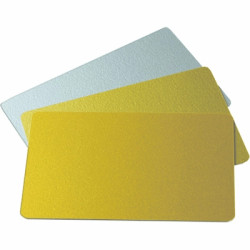
| Coloured PVC cards | Fotodek plain coloured 760 micron cards, from yellow and orange to burgundy and grey | Staff cards, membership cards and event tickets with a coloured base |
| Coloured core cards | The colour runs through the core, so it shows on the cut edge | A colour cue that shows on the card edge |
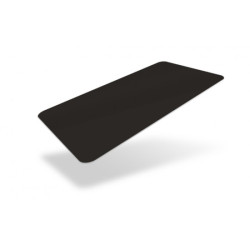
| Matte black cards | 760 micron black PVC in a matte finish | Retail price signs printed with a white ribbon |
| Metallic cards | Silver, ballroom gold, liquid gold and champagne gold | Membership cards, business cards and name badges |
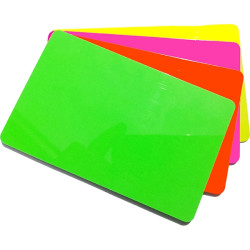
| Fluorescent green cards | 760 micron cards in a bright fluorescent green | Visitor and contractor passes that need to be spotted quickly |
| Hologram foil edge and gold foil edge cards | Fotodek white cards with a holographic silver or gold foil edge | Cards that need a security feature a desktop printer cannot add itself |
Do you need a magnetic stripe on your ID cards?
Add a magnetic stripe if the card has to be swiped, for example at a door, a till or a time and attendance terminal. The stripe holds data that you encode yourself. The main choice is the coercivity:
- Hi-Co magnetic stripe cards: a darker stripe that resists accidental erasure. They suit staff passes and access credentials that people carry for years.
- Lo-Co magnetic stripe cards: they take less energy to encode, which suits cards that are rewritten or reissued often, such as short term visitor passes.
Hi-Co cards also come in colours and with a signature strip. The stripe must match what your reader expects, so check the coercivity before you order. Our magnetic stripe cards page lists every option.
What is a signature strip card?
A signature strip card is a white PVC card with a panel on the reverse that takes a handwritten signature. It gives a visual check that the card belongs to the person holding it, which clubs, gyms and internal photo ID schemes still rely on. Signature strip cards come plain, in silver or combined with a Hi-Co magnetic stripe.
Which plastic ID cards open doors?
If the card is also an access credential, it needs the chip your access control system reads. A plain PVC card has no chip, so it cannot act as a door credential. There are three main technologies:
- 125kHz proximity cards such as EM4200 and HID Prox.
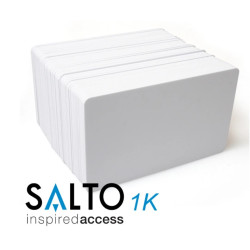
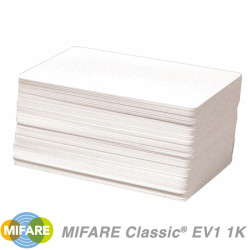
- 13.56MHz contactless smart cards such as NXP MIFARE Classic and DESFire.
- Contact chip cards read through a gold contact plate. Our contact chip smart cards are the Infineon SLE 5542 with 256 bytes of memory and the SLE 5528 with one kilobyte.
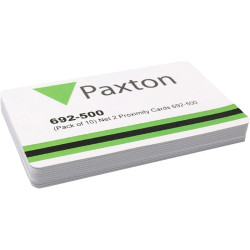
The system decides the card, so check what your readers use before you order. Our guide to access control cards and fobs explains how to identify it. Branded system cards such as PAC cards and Paxton cards are listed by system.
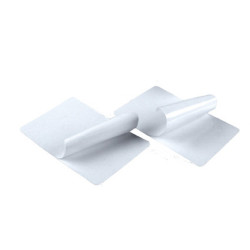
Already have a proximity card that will not take print well? Self adhesive cards let you print a new design and stick it onto the existing card. They are CR80 white PVC and come in 320, 400 and 480 micron.
Which plastic ID cards last longest?
For cards that are swiped many times a day or used outdoors, a composite card is the stronger choice. Our blank white composite cards are 60/40 composite, which means PVC with a 40% polyester core, at 760 micron. The polyester adds flex and strength, so the card is replaced less often. Composite and polyester core cards also stand up better to the heat of retransfer printers and laminators.
Are there eco friendly plastic ID card options?
Yes. Evolis paper cards carry the FSC label and meet the EN 14995 compostability standard. They suit event badges, visitor passes and other temporary cards and can go in ordinary recycling once they are no longer needed. Fotodek also makes biodegradable PVC cards in 760 micron, including hole punched versions.
What other card formats are there?
- 3 tag cards: a CR80 card divided into three key tags, each 28 x 54mm with a pre-drilled hole for a key ring. They print on most standard ID card printers, including QR codes and barcodes.
- 480 micron cards: a thinner, lighter CR80 card for loyalty cards, tickets and short term passes.
Should you print your own ID cards?
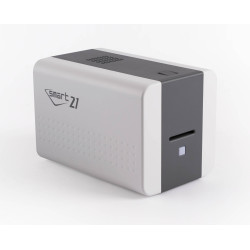
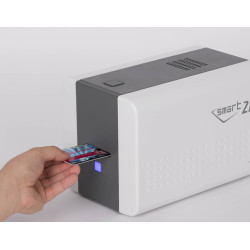
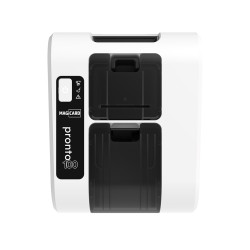
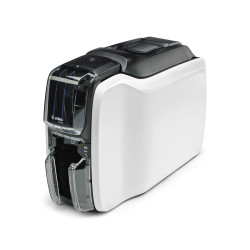
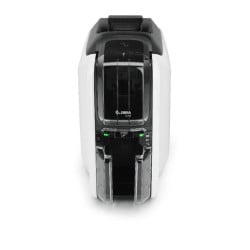
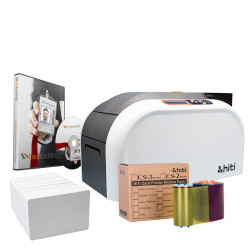
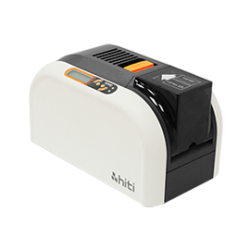
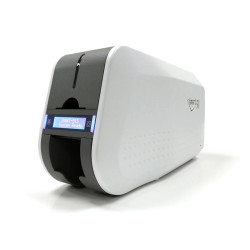
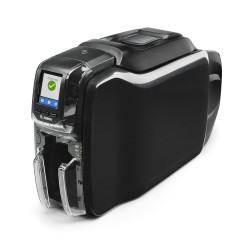
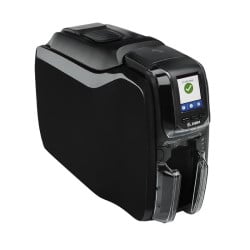
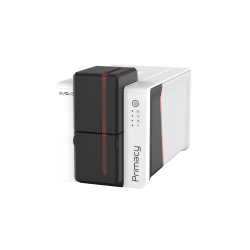
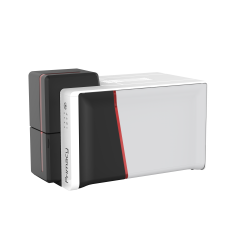
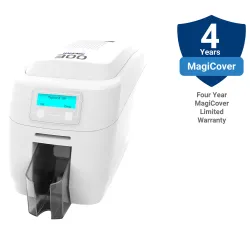
Printing in-house makes sense when you issue cards regularly or need them on demand. You will need an ID card printer and a ribbon to match it. If you only need a batch, our plastic card printing service produces finished cards to your artwork, printed on one or both sides with options such as a HoloImage and lamination.
Not sure which card fits your printer or reader? Send us a photo or a sample card and the Plastic-ID team will identify it before you order.